
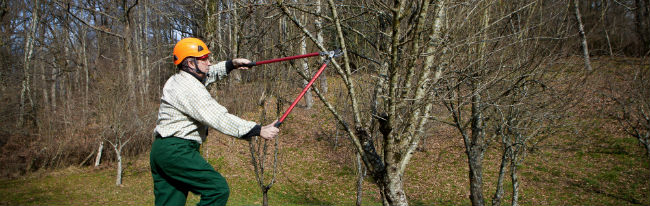
Garden Maintenance: FEBRUARY
Remember, your gardener is not likely to be so busy until Spring and might be available for larger garden projects like paving, fence building, pond digging and installing water butts.
Summer came early in 2011 and many plants suffered from the dry weather. In an average summer gardeners could harvest nearly 640 litres of rainwater from a 7ft by 5ft shed. Depending on the weather, this could keep up to 50 tomato plants happy for three months! The sooner you get a water butt installed, the more you can save.
Top gardening jobs for February
1. Prune shrubs that have finished flowering and finish pruning deciduous
trees.
2. Prune hardy evergreen hedges and renovate deciduous hedges
3. Cut back deciduous grasses left uncut over the winter.
4. Put a top
dressing around plants after pruning, planting etc such as bark or gravel
around alpines. This helps to improve the soil, suppress weeds, insulate
roots and retain moisture during the summer.
5. Apply a general
fertiliser to all plants. Apply the fertiliser where the roots are - roughly
a similar area to the spread of the branches.
6. Regularly check
stored fruit and veg removing any rotting or mouldy specimens.
7.
Regularly deadhead plants and sweep up fallen debris, to prevent disease
spreading.
8. Prune climbers.
Top Tip: Reduce the need for weeding by stopping them from
growing in the first place!
-
Benefits of garden mulch
Lawn Care
- Lay turf and repair the lawn if it is not too wet or frosty but avoid
compacting the soil.
- Cutting the lawn edges can really improve the look
of your garden and save you work later on.
- If you need to mow the lawn
set the cutting height to its maximum.
- Snow mould (Fusarium patch) can
be a problem in wet weather especially on overfed lawns that have been left
to grow too long.
Did you know?
Mole activity increases in February as it is the mating
season and they are building nests.
Trees, shrubs and climbers
- Its okay to move established hedges, shrubs, trees and climbers and
plant new specimens.
- Continue to plant roses but remember not to plant
them where roses have previously been planted to avoid replant disease.
- This is your last chance to take hardwood cuttings of
ornamental shrubs such as Salix, Forsythia, Ribes, Elaeagnus, Rosa, Weigela,
Cornus, Chaenomeles and Escallonia.
- Summer-flowering deciduous shrubs
can be pruned between February and March to keep them tidy such as Buddleja
davidii, Hydrangea paniculata,Ceratostigma, Lavatera, Leycesteria, hardy
fuchsias, Perovskia and deciduous Ceanothus. Some of these can be cut back
very hard (stooled).
- Delay pruning spring-flowering shrubs until
immediately after flowering or you might lose this years display.
-
Prune out shoots on hardy evergreens that should be two colours but are
growing with only one colour; otherwise the whole plant could revert
to one colour.
- Cut back Ornamental vines, ivy, Virginia creeper and
Boston ivy now.
- Prune Wisteria by cutting back the sideshoots by
two or three buds. Avoid cutting off flower buds.
- Prune Campsis
stems by cutting back lateral branches to within two or three buds of the
main branch.
- Late summer and autumn flowering Clematis can be cut back
to the lowest pair of strong buds.
- Winter-flowering heathers can
be trimmed as the flowers fade, keeping them bushy and colourful.
-
Don't forget it's last chance month for pruning apples and pears. Next month
the sap will start moving. It's also time to cut autumn fruiting raspberries
and blackcurrants down to the ground to stimulate the new canes.
Want to add a tree to your garden?
-
Trees for small gardens
-
Trees native to the UK
Flowers
- Cut back ornamental grasses and any other perennials that were left for
some winter interest.
- Divide clumps of herbaceous perennials that have
either become too large, that you want to propagate, are flowering poorly or
have lost their shape.
- Plant Lily bulbs in pots for flowers
in the summer.
- Deadhead winter pansies and other winter bedding
to prolong the display.
- Top up pots and tubs with fresh
compost.
- Check that stored Dahlia and Canna tubers are not too dry or
wet.
Top Tip: Check whether pots and other containers need watering - even at this time of year, they can dry out.
Greenhouse and houseplants
- Deadhead Amaryllis but leave the flower stalks to die down naturally.
- If you notice the leaves on potted Cyclamen turn yellow you may be
overwatering them.
- Conservatory climbers can be pruned
towards the end of the month.
- Prune Plumbago, passion flower and
jasmine to two or three buds from the main framework.
Ponds
- Not much to do with ponds; stop them freezing over and keep an
eye on the water level.
- If you don't have a pond why not have a pond
made for you ready for the summer?