
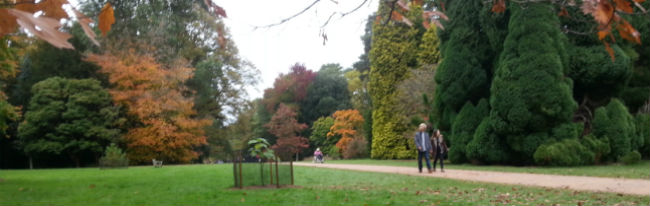
Garden Maintenance: NOVEMBER
Autumn is a good time to start thinking about landscaping projects you might like to do over the winter ready to enjoy next spring.
November top gardening jobs
1. Keep lawns trimmed but not as short as in the summer.
2. Plant
tulip bulbs this month.
3. Lift and store dahlias, cannas and begonia
tubers planted in flower beds after the first frost
4. Pruning deciduous
trees, shrubs and hedges can start from now and throughout the dormant
season.
5. Plant roses.
6. Prune, stake plants to protect from wind
damage.
7. Landscaping - Now is a good time to make plans for garden
projects while the garden is in its bare bones.
8. Garden hygiene helps
prevent diseases carrying-over from one year to the next. Rake up and
destroy (i.e. do not compost) any infected or decaying leaves.
Lawn Care
- Grass will continue to grow in temperatures above 5C (41F). Don't cut
the grass as short as you would in the summer to avoid damaging the lawn.
- Rake fallen leaves off lawns - they will block out the light and stop
moisture escaping from the grass; increasing the chance of moss and algae.
- As the soil isn't waterlogged, in mild parts of the country you can still
carry out autumn lawn care i.e. scarification, aeration and top dressing.
- Don't feed the lawn with left-over summer feeds. These contain too much
nitrogen, which stimulates lush growth which will be vulnerable to diseases.
Use an autumn lawn feed, which contains more potassium and phosphorous and
strengthens the roots.
- It is too late to sow grass seed, but if the
weather is not too cold, new lawns can still be laid from turf.
- It is
too late to apply lawn weed killers. They work best when the weeds are in
active growth.
- Established meadows can be cut the same as normal grass
over the winter, but don't cut them as short as you would your lawn.
Recently planted meadows will not need mowing until the middle of spring.
- Toadstools often appear on lawns at this time of year - Most are harmless
saprophytic fungi but are best removed if small children are present.
-
Watch your lawn for signs of water logging You may be able to remedy this
with some maintenance.
- Algae can be a problem on lawns where there is
poor drainage, excessive shade, or under the drip-line of trees.
-
Fusarium patch (snow mould) may be a problem in wet weather and on overfed
and lush lawns that have been allowed to grow too long.
- Remember to
drain the fuel from your mower; unleaded petrol doesn't keep very long.
Landscaping
- Professional gardeners often have less work during the winter and will
be available for landscaping such as paving, fence building and pond
digging.
- Now is a good time to make plans for garden projects while the
garden is in its bare bones.
- Be aware that decking and stone slabs can
become slippery in wet weather; pressure washing will help.
- If you have
not already done so, build a compost heap to collect autumn leaves.
- Dig
new flower beds as the weather allows. Avoid walking on the soil in wet
weather as this will compact it.
- If your lawn suffers die-back from
treading during the wet winter, you may wish to lay stepping-stones to allow
easy access without causing damage. Stones can be laid at a low enough level
to avoid interference with mowing.
- Protect exterior water pipes from
frost damage.
Green House and House Plants
- You wont need to water or feed house-plants as much during the shorter
winter days.
- Cacti and succulents will need a period of dormancy over
the winter so you will not need to feed them and just keep the soil barely
moist.
- Pot up amaryllis bulbs (Hippeastrum ), and bring them back into
active growth with regular watering and feeding.
- Stand tropical
house-plants on trays of wet gravel to keep the humidity up when you turn
the central heating on. Grouping them together helps to create a humid
micro-climate around your house-plants.
- Cleaning out old plants from
your greenhouse and then clean and disinfect the greenhouse with Jeyes Fluid
or Citrox to kill off any pests.
Trees, Shrubs and Hedges
- November is an ideal time to plant roses but don't plant them where
roses have been planted previously or they may suffer from replant disease.
- Bare-root deciduous hedging plants, trees and shrubs become available this
month. They need to be planted quickly so they don't dry out. You can still
order and plant containerised trees and shrubs.
- This is also a good
time to transplant trees and shrubs growing in unsuitable positions if they
are less than 2 years old; otherwise you might not dig up enough roots for
it to establish again.
- Tie wall shrubs and climbers to their supports
to protect them from wind damage; prune off any growth that refuses to be
trained. Check tree stakes and ties to see if they need loosening or
tightening.
- Take hardwood cuttings of ornamental shrubs such as
Forsythia, Cornus, Hydrangea, Euonymus, Ilex and Salix.
- Pruning
deciduous trees, shrubs and hedges can start from now and throughout the
dormant season. It is easier to see what you are doing when the branches
have no leaves. Exceptions are tender plants and - Prunus species (e.g.
ornamental cherries, plums and almonds; fruit with a stone). Evergreens are
best left until the spring. Take this opportunity to check for any diseases.
- Shrubs such as Buddleja davidii, Cornus alba and Lavatera that are
normally pruned hard in the spring - can be cut back by half now to prevent
wind rock and keep them tidy.
- If not already done so, Climbing roses
should be pruned now at the very latest.
- Lightly prune bush roses as
reducing their height will prevent wind damage as they often have shallow
roots.
Flowers
- November is a good time to plant new herbaceous perennials while the
soil is still warm but the soil is still moist.
- November is still a
good time to lift and divide overgrown clumps of herbaceous perennials to
improve shape, health and flowers and will increase your stocks for you to
keep or give to a friend.
- Plant tulip bulbs this month. Some tulips
persist year to year but if you had a poor display this year you will need
to treat them as bedding plants and plant more bulbs now.
- Last chance
to plant out winter bedding plants such as wallflowers, Bellis,
forget-me-nots, Primula, winter pansies (viola).
- Keep cutting down
faded herbaceous perennials and add the cuttings to the compost heap.
Penstemons are best left as-is (except for dead-heading) until the spring,
when they can be cut back further.
- Ornamental grasses and bamboos can
be cut back and tidied up but some have attractive flower heads that will
provide some winter interest. These can be pruned in the spring to make way
for new growth then.
- Lift and store dahlias, cannas and begonia tubers
planted in flower beds after the first frost (dahlias typically turn black
when hit by frost). Only in mild areas can dahlias and cannas be left to
overwinter in the ground provided they are well covered by soil/mulch/straw
etc.
- Begonias should always be brought in, dried out, and stored in a
similar way as dahlias.
- Digging the soil over will expose pest larvae
to birds and frosts, as well as improving soil structure saving you much
work next year. Add mulch or compost to counteract nutrients washed away by
winter rain. Digging clay soils after autumn rain will be difficult.
Mulching clay soils will help to improve and maintain soil structure.
-
Weeds may still appear so hoe regularly to keep them in check.
Pond Care
- Stop feeding fish once the cold weather starts.
- Remove dead
foliage from floating plants.
- Regularly shake off leaves from nets over
ponds to prevent them from building up and rake out fallen leaves from ponds
that do not have a net.
- You can still divide hardy water-lilies and
pond plants to increase your stocks and keep them under control. A maximum
of 50% of the waters surface should be taken up with planting.
- Remove
submersed pumps etc and clean them so that they can be stored safely for the
winter.
- Don't let the water freeze; this can be deadly to fish; but
don't use hot water!
- Watch out for hungry herons - they will deplete
fish stocks quickly.